
Sustainable Home Upgrade Trends for 2026
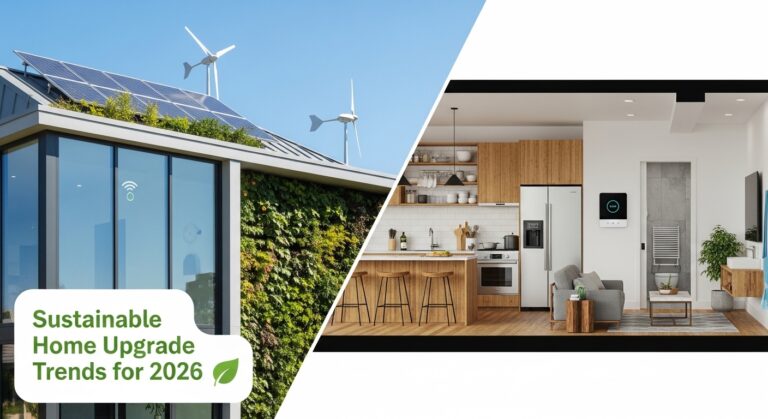
As we move into 2026, homeowners are more informed and more conscious of long‑term running costs than ever before. Energy efficiency now sits at the top of the priority list, with many surveys indicating reduced bills and improved comfort as their main motivation for upgrading. This marks a clear shift toward whole‑house planning, even among those renovating rather than building new. Higher insulation performance, airtight construction and triple‑glazed windows are becoming standard expectations for anyone aiming to future‑proof their home.
Renovation on the rise and Low‑Carbon building materials gaining ground Interest in deep renovation projects continues to grow, while self‑builders are turning to more sustainable construction materials. Timber frame systems, SIPs (structural insulated panels), and natural materials such as hemp and strawcrete are gaining traction. Although masonry still plays a major role in UK construction, more than half of respondents say they are exploring modern, low‑carbon building methods for better thermal performance and sustainability.
Heat Pumps Lead the Low‑Carbon Heating Movement
Heat pumps remain one of the most sought‑after sustainable heating options. Around 82% of surveyed homeowners plan to incorporate a heat pump or similar low‑carbon heating system into their project. With Boiler Upgrade Scheme (BUS) grants offering up to £7,500, heat pumps represent a strong pathway away from fossil‑fuel systems. However, success depends on proper integration — ensuring heat emitters, insulation levels and controls work together for year‑round comfort and genuinely lower bills.
Educational resources and expert advice are becoming crucial. A whole‑home, fabric‑first approach helps homeowners maximise heat pump performance and avoid common pitfalls. Using an MCS‑certified installer remains the recommended best practice.
Smart home energy systems become mainstream
Smart energy systems are rapidly moving from optional extras to essential components of sustainable homes. Smart thermostats, zoned heating control, real‑time energy monitoring and automated demand‑response features help homeowners reduce energy waste and optimise their power usage.
When paired with solar panels, battery storage and EV charging, smart controls can significantly cut running costs. With AI‑powered home‑energy modelling now emerging, households will soon have even more precise control over consumption. Battery adoption is also on the rise, boosted by incentives such as Tesla’s £750 rebate for Powerwall 3 installations.
Government Policy and a Push for Better Standards
Homeowners and self‑builders can expect stronger policy direction in 2026. The long‑awaited Future Homes Standard is expected to provide clearer rules for low‑carbon new builds, while the government’s proposed £13.2 billion Warm Homes Plan aims to support energy‑efficiency upgrades across existing housing stock.
The trend is unmistakable: UK homes will need to meet higher energy‑performance standards, and fabric‑first principles will become the norm rather than the exception. Self‑builders remain ahead of many volume‑housebuilders in quality and sustainability, but choosing professionals with proven expertise is essential for achieving long‑term performance.
The Increasing Importance of a Valid EPC Certificate
With energy efficiency now central to home value and compliance, having a valid EPC certificate is more important than ever.
A current EPC helps homeowners
• understand their property’s true energy performance
• plan upgrades strategically
• access grants and government schemes
• increase property marketability and long‑term value
As regulations tighten, EPC ratings will play a larger role in mortgage approvals, rental requirements and resale potential — making accurate assessments essential for anyone building, upgrading or renovating.
Who Is Leading the Charge? Consumer Insights for 2026
Most self‑builders and deep renovators fall within the 55–74 age group, often investing in their long‑term “forever home” with comfort and efficiency in mind. Retrofit interest is also rising across urban and suburban areas, where older, draught‑prone housing stock and high energy bills are driving demand for credible energy‑saving solutions.